Welcome to the monthly digest for April
Hi ,
During April, David James and Trevor Bell reflected on the state of Australia's media. On Anzac Day, former Army Colonel Phillip Hoglin wrote on how the religious-based model of pastoral care in the Australian Defence Force is failing a workforce that is fast becoming non-religious. And Alison
Courtice took a look at the history of Queensland's controversial Religious Instruction program.
If you’d like to send a Letter to the Editor or submit an article for publication, please contact me via editor@rationalist.com.au.
|
Highlights from Rationale
|
| The death of traditional journalism
By David James
Journalism is a humble activity, or at least it should be. To be a reporter in a newsroom is to be continually confronted with severe obstacles to uncovering the truth. In the past, the way to deal with that was to practise disinterest: avoid personally interfering with the story. But, because of the rise of advocacy journalism, that approach has changed, leaving the trade in a greatly diminished
state.
|
| Religious chaplaincy is failing the Defence Force
By Phillip Hoglin
The toll that military service has on our service personnel has long been acknowledged. The ongoing Royal Commission into Defence and Veteran Suicide, established mid-2021, has brought this into sharper focus. The hearings have heard some truly harrowing accounts of how ‘the system’ has let service personnel down. As the Royal Commission has already heard, there are gaps in the support provided to veterans.
And, when current and former ADF members fall through these gaps, the worst possible wellbeing outcomes can result.
|
MBJ's view on current affairs
|
| The election is a race – it’s a horse race
By Trevor Bell
In this year’s campaign, we’re not talking about the big ideas and we’re not talking about what we want to change in this country. We’re not talking about what policies are going to be good or bad for us. Sadly, we’re not getting a discussion about policies and big ideas because Australia’s media is engaged with ‘horse race journalism’. This kind of media reporting during election campaigns focuses on
candidates’ mistakes, their strategies and the question: ‘Who’s winning?’
|
| Challenging the Jesus myth theory
By Hugh Harris
In 1968, when I was a young woman of childbearing age and the population of the world was 3.5 billion, Paul and Anne Ehrlich’s book The Population Bomb was published. The Ehrlichs estimated that one in four people on the planet went hungry. Population, which was increasing exponentially, had reached a point where there were too many people for the planet to adequately support at the current rate of
growth. Therefore, by the mid-1970s, an overpopulated world would lead to desperation, mass starvation, war, pollution, ecological degradation and the collapse of civilisation as we know it.
|
| 112 years on, Religious Instruction remains controversial in Queensland
By Alison Courtice
The genesis – pun intended – of Religious Instruction (RI) in Queensland state schools has its roots in a 1910 referendum. When Queensland state schools were established by the State Education Act in 1875, they were required to be secular, which meant that the state was to have no involvement in religion. This was at the request of the Christian churches, which wanted children to be free of any religion within
the state school system so that parents could attend to faith instruction.
|
| Je Suis Mill
By Paul Monk
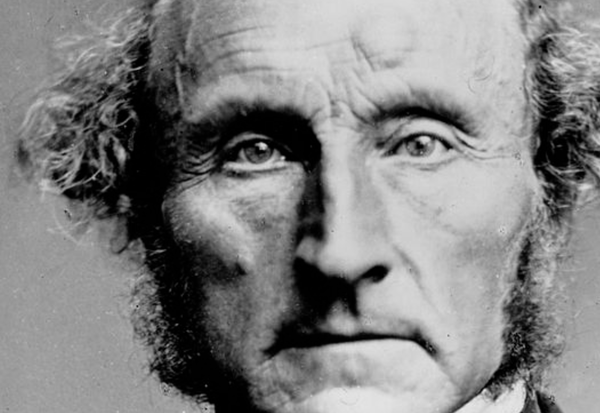
Mill made less of an impression on me as a young man than he should have done, or perhaps would have done if I’d had a liberal upbringing. It was Nietzsche, Schopenhauer, Trotsky, Sartre and Camus who revolutionised my adolescent thinking after leaving Catholic secondary school. The cast of mind of Mill only gradually came to appeal to me more in my maturity. Now, verging on senescence, I find I admire
his thinking and follow to a considerable extent his way of life more than ever. That’s why I have been presumptuous enough to call this piece ‘Je Suis Mill’ – to echo the J. S. and to echo the slogan ‘Je Suis Charlie’.
|
|
|