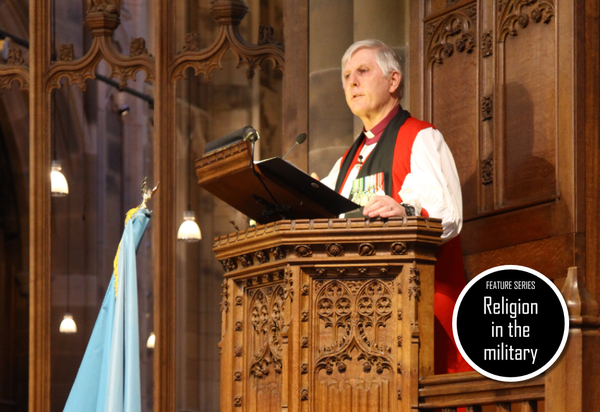
Welcome to the monthly digest for November Hi , During November, this Editor launched a feature series on religion in the military. Dimitris Xygalatas explored the prevalence of magical thinking. And David James wrote about the journey from Darwinian
evolution to the increasing manipulation of the evolutionary processes of species, including humans. If you’d like to send a Letter to the Editor or submit an article for
publication, please contact me via editor@rationalist.com.au. |
Highlights from Rationale
|
| From ‘Blind Watchmaker’ to seeing watchmakers
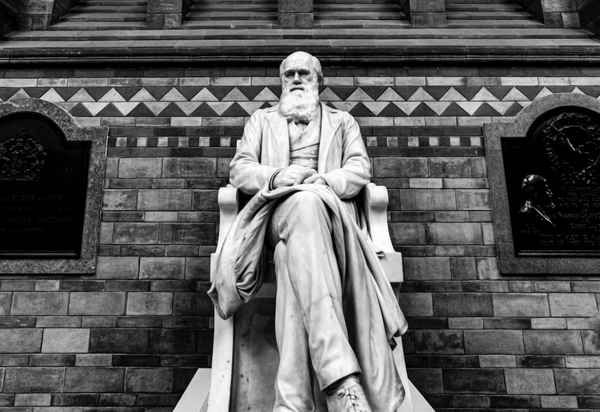
By David James For most of the first 15 years of the 21st century, there was a fierce debate between rationalist supporters of Charles Darwin’s theory of evolution and
advocates of creationism, a religiously-inspired view that evolution could not be explained by random variation. The zoologist and atheist Richard Dawkins was perhaps the most high profile protagonist in the rationalist camp, but there were many more. Philosopher Daniel Dennett and commentators Sam Harris and Christopher Hitchens teamed up with Dawkins to decry what they saw as the anti-science positions of those critiquing Darwin. |
| Losing faith in Defence
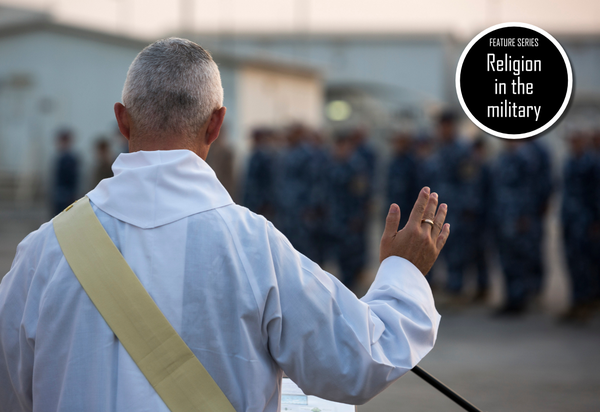
chaplaincy By Si Gladman During the Great War, chaplains serving alongside Australian infantrymen were surprised to find non-religious men were capable of performing good and
even heroic acts. “Since most chaplains believed that religion provided the only basis for the exercise of the virtues, they needed to reconcile these apparently contradictory facets of character. Some chaplains implied that if a man was virtuous he was necessarily religious,” wrote Michael McKernan in his book Australian Churches at War. Upon returning home, chaplains were often asked whether men became more religious under fire. McKernan noted that some chaplains witnessed a lack of interest
in religion among most soldiers. Asked if there was any truth to the claim that there were ‘no atheists in foxholes’, C.O.L. Riley reported he had seen no evidence of mass conversion. |
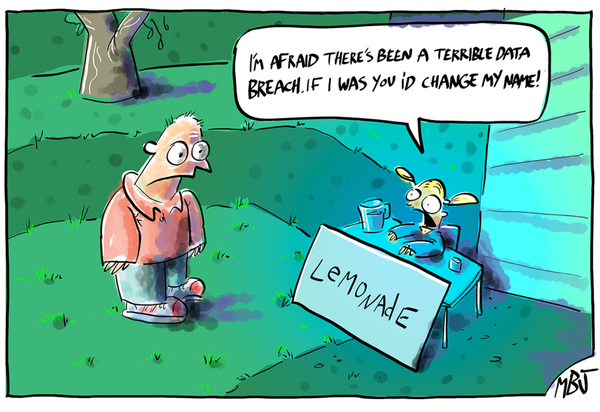
MBJ's view on current affairs
|
| Why religious discrimination is
okay By Gary Bakker To ‘discriminate’ is a very useful, indeed necessary, activity. The original and broader meaning of the
word is to recognise and understand important differences. So we must all, for example, learn to discriminate between right and wrong. But the newer narrower meaning, as encountered in modern anti-discrimination legislation, refers to the practice of unfairly or prejudicially treating certain groups of people differently. The law wants to discourage this type of unjust discrimination. What makes such distinctions or differential treatment unjust is the application of irrelevant
criteria to a judgement or selection. Of course, which criteria are irrelevant to a determination is often itself a matter of judgement, so we talk of unjust or societally unapproved criteria because society’s approval can change over time. |
| Why magical thinking is so
widespread
By Dimitris Xygalatas
My fascination with seemingly bizarre cultural beliefs
and practices eventually led me to become an anthropologist. I have come across similar superstitions around the world, and although one may marvel at their variety, they share some common features. At the core of most superstitions are certain intuitive notions about how the world works. Early anthropologists described these intuitions in terms of principles such as “similarity” and “contagion.” According to the principle of similarity, things that look alike may share some deeper connection,
just as the members of a family tend to resemble each other both in appearance and in other traits. Of course, this is not always the case. But this inference feels natural, so we often abuse it. |
| The committee of clerics lording it over
Defence
By Si Gladman
Every three months, Australian taxpayers pay to send a group of religious
clerics, including bishops, senior pastors, a rabbi, an imam and other religious figures, to Canberra to meet at a modern hotel next to the capital’s airport. At 8.30 in the morning, they meet over consecutive days to discuss matters relating to religion in the Australian Defence Force (ADF). Few Australians – even members of the Defence Force – would have heard of the Religious Advisory Committee to the Services (RACS). Many, no doubt, would be surprised to learn of the privileged place this
committee holds in Defence and the influence it wields. |
|
|