Welcome to the monthly digest for September Hi , During September, we welcomed new contributor Jacob Nazroo, who wrote about the ethics of purchasing animal-source foods. In response to the attack on Salman Rushdie, Paul Monk wrote about the multiple threats to freedom
of speech. Phillip Hoglin highlighted how religious concepts remain embedded within Australia's military doctrine, in particular the Army’s standing doctrine on Character.
If you’d like to send a Letter to the Editor or submit an article for publication, please contact me via editor@rationalist.com.au.
|
Highlights from Rationale
|
| A more ethical way to buy animal-source
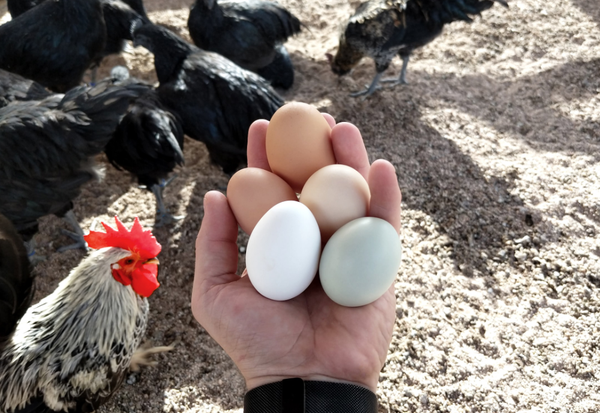
foods By Jacob Nazroo If you have $6.50 and you want to buy 12 eggs, you could either spend it all on 12 free-range eggs, or $4.50 on caged eggs, saving yourself $2. If you’re
concerned about making the more ethical purchase, which option should you choose? I think a great majority of people would say the first, but I would say: “It depends what you do with the $2.” If you give $2 to a highly effective animal welfare organisation, research suggests you could very plausibly do thousands of times more good than the good that is done by buying 12 free-range instead of caged eggs. More people should take this approach to ethical consumption of animal
foods. |
| Salman Rushdie and freedom of
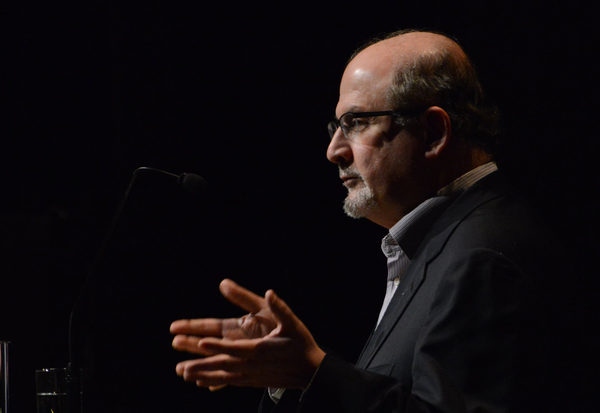
speech By Paul Monk Salman Rushdie was assailed by 24-year-old Muslim fanatic Hadi Matar on 12 August as he was about to give a public lecture in New York. Matar
stabbed him several times and also wounded the interviewer, Henry Reese, who was beside Rushdie on stage. The assault was denounced by many figures, including heads of state, around the world, as a direct attack on freedom of speech. In response to the attack on his father, Zafar Rushdie, the son of the novelist, declared, “Free speech is the whole thing, the whole ball game. Free speech is life itself.” Why would that be? Freedom of speech has, in fact, been something of a rarity
historically. |
MBJ's view on current affairs
|
| Innocent II has a lot to answer for By Noel Turnbull Pope Innocent II has a lot to answer for. After his elevation to the papacy in 1130, the church was deeply divided and there were
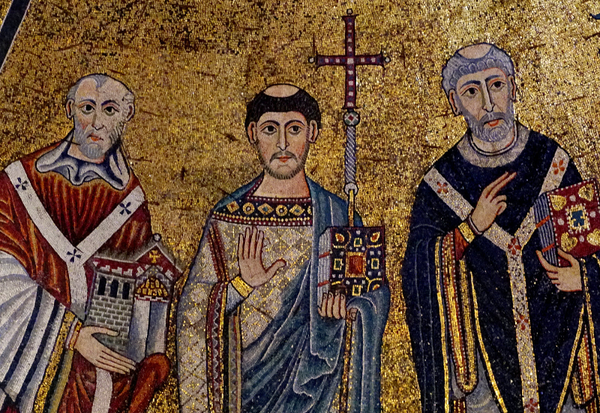
actually two Popes, one of whom – not Innocent – had been supported by a majority of cardinals. In 1139, after his competitor had died, he called the Second Lateran Council to address the divisions. The Council’s 23rd canon declared that: “We condemn and cast out of the church as heretics those who, simulating a kind of religious zeal, reject the sacrament of the body and blood of the Lord, the baptism of infants, the priesthood, and other ecclesiastical orders. As well as matrimony and ordain
that they will be restrained by the civil power. For their partisans also we decree the same power.” |
| Proselytising through military
doctrine
By Phillip Hoglin
To the casual observer, the inclusion of religious concepts in the Australian
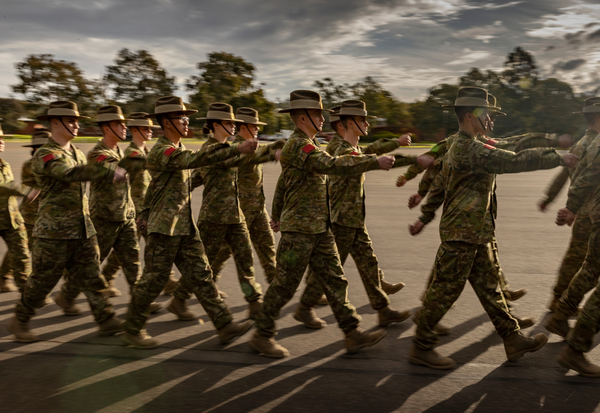
Army’s warfighting doctrine would seem to be a poor fit. It is difficult, if not impossible, to envision a reason to proselytise in the written strategic and operational aspects of how the Australian Army might fight a land war. A practice of embedding overt Christian concepts within the military doctrine of a secular country feels as if it should be strictly off-limits. Unfortunately, this is not currently the case. Religion is invasive in at least one of the Australian Army’s foundational land
warfare doctrines on the human concept of ‘character’. |
| Reasons to be hopeful for more accurate Census data on
religion
By Michael Dove
At the 2021 Census, we’d like to think that our Census21 – Not Religious? campaign was
moderately influential, at the very least, in terms of encouraging Australians to consider the ‘no religion’ option. In moving forward, we are most certainly committed to continuing our campaign across the areas of: 1) accuracy of data; 2) policy and funding; 3) voice and influence. The Census may not be the best measure of religion or religiosity, or indeed the ‘no religion’ perspective. But all hope is not lost. In this article, I’d like to share some information about activities we’re engaged
in right now in regards to the first area of focus – accuracy of data. |
|
|