Welcome to the monthly digest for January Hi , During January, Paul Monk reflected on the leadership of New Zealand Prime Minister Jacinda Ardern and Adrian Barnett wrote on the problems with measuring the impact of
academic journals. As part of our 'From the vault' series, we republished Leslie Allan's 2019 piece on the importance of being objective.
If you’d like to send a Letter to the Editor or submit an article for publication, please contact me via editor@rationalist.com.au.
|
Highlights from Rationale
|
| Success without substance By Adrian Barnett In 2022, The Lancet medical journal achieved a feat that has parallels with Nigel’s Scrabble win. It achieved the highest ‘impact factor’ of any scientific journal in history. This
number does not measure noble goals such as improvements in the length or quality of life. Instead, impact factor is a numbers game tangential to the purpose of medical research. Like Nigel’s Scrabble game, it is success without substance. The impact factor is calculated using the total number of times scientists have referenced papers from the journal, so it measures attention, both good and bad. |
| In recognising all faiths and beliefs, we can show fairness
and equity By Councillor David Lewis My motion does not abolish Christian prayer; it merely allows for others to be involved as well, from time to time, and for this small space to
be shared so that we better reflect our community. I want you to think about it as a way to demonstrate our understanding of the complexities of the community – an acknowledgement that we stand for, and with, all people who make our region home. And, as we know, roughly half identify as Christian and roughly half do not – they identify as having no religion, as atheist, as agnostic or as having some other religion. If we want to represent our entire community, we cannot exclude half of them,
especially when there is no need to. |
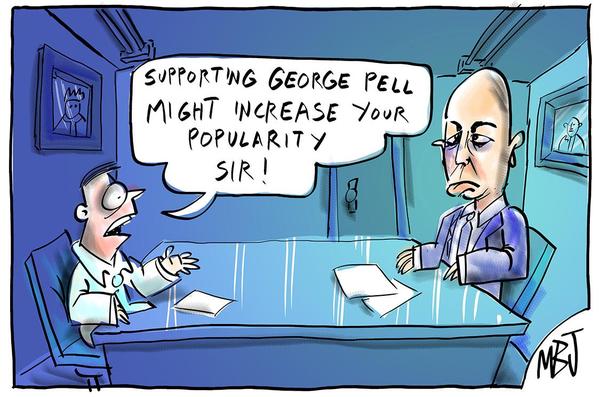
MBJ's view on current affairs
|
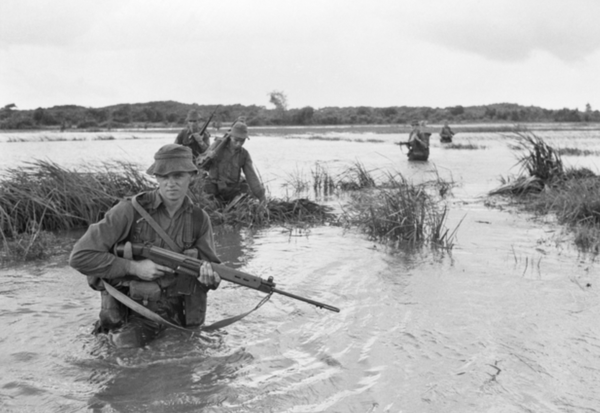
| The faithless in foxholes By Noel Turnbull Serving military personnel are confronted by regular church parades, visits from chaplains, and a host of situations where God and
religion are mentioned. When I was a conscript more than 50 years ago, one of the first things that happened – after being run around and issued gear – was an appointment with an Army chaplain of the new recruits’ religion. When I told the non-commissioned officer (NCO) organising the recruits that I didn’t have a religion, he was flabbergasted – actually, a few other ‘f’ words were used, as well as references to my character and parentage. Clearly, he didn’t know what to do with
me. |
| The finest kind of democratic
leader
By Paul Monk
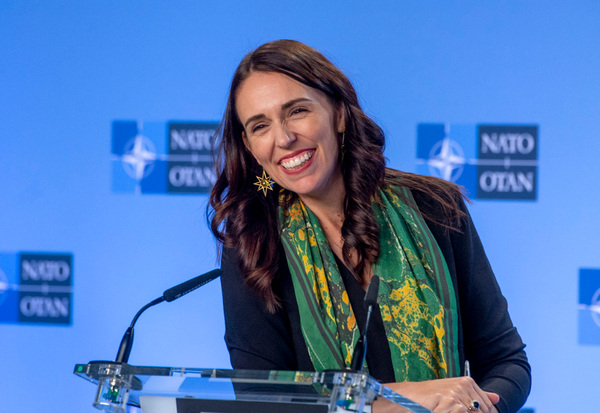
After five and a half years as Prime Minister of New Zealand, Jacinda Ardern is stepping
down by 7 February. She has won respect during her time in office for her qualities of character and engaging personality. She has, of course, had her critics but that goes with the territory. We should, as she departs from the position to settle into private life, celebrate her as the finest kind of leader democracies can produce. How could we not reflect that she became Prime Minister at the age of just 37 and had a baby while in office? Yet she exhibited, from the start and right up to her
announcement yesterday, a maturity of judgement and a degree of emotional intelligence that have been all too rare in Western heads of state in recent times – not least among the men. |
| George Brandis and the Christian persecution
complex
By Hugh Harris
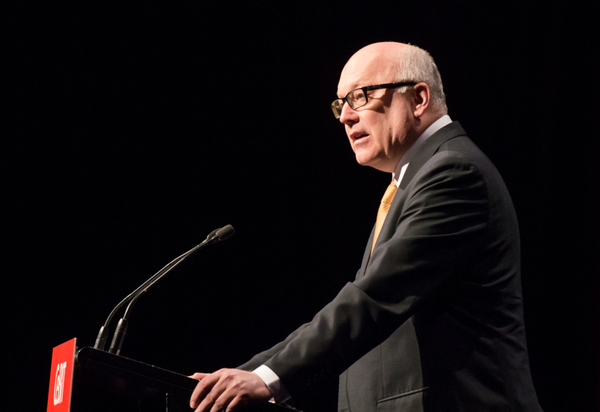
Attending the Religious Freedom roundtable in November 2015 on behalf of the Rationalist
Society of Australia, I was bemused by the welcome speech given by the event’s sponsor, the Honorable Attorney-General George Brandis. Entering in his dark suit, with his grave countenance, Brandis reminded me of the archetypical Cold War CIA director – the sort you might see in the Bourne series of films. He began by noting how Catholics were now “routinely the subject of mockery and insult by prominent writers and commentators”, quoting Dyson Heydon who described it as “the racism of
the intellectuals”. “Or perhaps he should have said the pseudo-intellectuals,” said Brandis through gritted teeth. |
| The importance of being objective
By Leslie Allan
All too often, I come across the view that when we make moral judgments we are simply expressing our personal likes and
dislikes. Saying “Hitler was bad”, in this view, is the same as saying, “I don’t like Hitler”. For people who think morality is subjective, aspiring to objectivity in ethics is a chimera, to be avoided as a remnant of a bygone era of superstition and nonsense. To some extent, this approach to moral judgements seems unavoidable, given the demise of religious world-views and other superstitious beliefs since the Enlightenment. However, I think this radical subjectivism is mistaken. Moral
discourse, at its core, is about giving objective reasons for our judgements about how we act towards one another and other sentient creatures. |
|
|