Welcome to the monthly digest for March Hi , During March, Ian Robinson explored modern society’s obsession with storytelling and how it has become a weapon for bad-faith actors, Natalya Maitz examined Australia's environmental protection laws, and Jack
Dikian wrote about the advancement of artificial intelligence technologies and the legal, ethical and political challenges they pose. Si Gladman
Editor |
Highlights from Rationale
|
| Our parliament needs to become a more inclusive and welcoming
place for all By Mike Gaffney MLC Here in this place, each day we begin proceedings by acknowledging the traditional custodians. The Standing Orders then provide that the President
reads two prayers, including the Lord’s Prayer. For a number of reasons, I believe that this practice should change. And the statement that I propose in the motion would replace the practice of reciting prayers. Tasmania is recognised nationally as a leader in regards to our anti-discrimination laws and our gender laws. And, as Tasmanians, we are proud of this. If my colleagues in this place were to support this motion today, Tasmania would, once again, be at the forefront of positive change in
addressing inequality and accepting diversity. |
| The tyranny of story By Ian Robinson Story was once a tool for understanding the world and for improving it. The hero or heroine always defeated the monsters. Today, story has become a weapon for undermining the world’s values
and for creating and nourishing real monsters who would destroy that world. The ability to tell and absorb stories has always been an important distinguishing feature of the human species, and one of the traits that distinguishes us from other species. The human ability to tell and absorb stories has materially helped us evolve the complex civilisation that we inhabit today. |
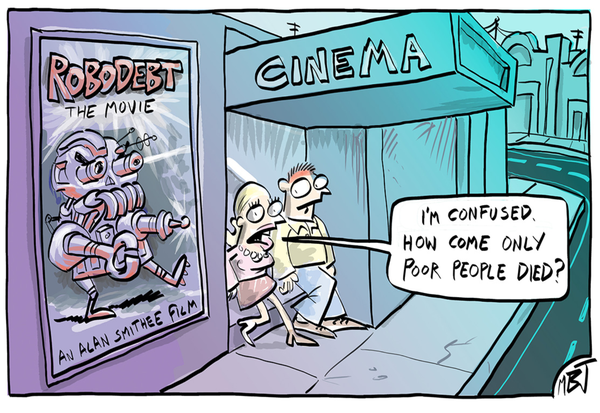
MBJ's view on current affairs
|
| What can be done to help Australia’s
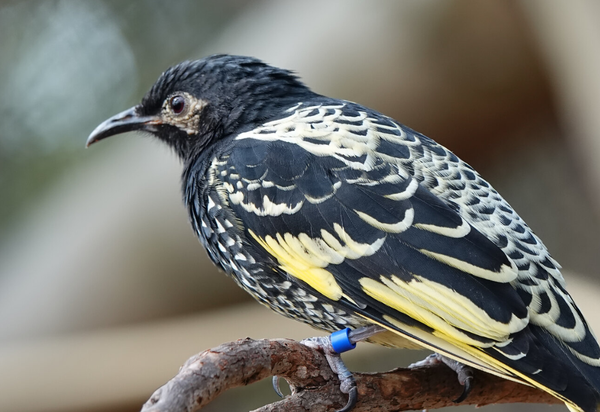
biodiversity By Natalya Maitz The regent honeyeater is a small bird, mostly black, with speckles of soft yellow dotted down
its body. Its chirp is a scratchy warble that coos through pockets of Australia’s eastern coast. A critically endangered species, there are believed to be fewer than 400 left in the wild. A high-priority threat to their survival is habitat loss from residential and commercial development. Australia’s main law protecting the environment has been in place since 2000. As of now, it doesn’t mention climate change. Businessman Graeme Samuel said reform was “long overdue” in an independent October
2020 review. |
| How deregulation left central banks with few
weapons
By David James
Since the global financial crisis of 2008, Western financial markets have
experienced steadily falling interest rates. Three years ago, they were close to zero. In 2020 the US benchmark interest rate, the 10-year treasury fell to 0.5 per cent, which meant that, after factoring in inflation, it was effectively nothing. The pattern was similar in Australia; the 10-year government bond yield fell to 0.8 per cent. Negligible interest rates might seem like a good way of managing short-term crises in the economy – and there was a great deal of concern in 2020 about the
effect of the pandemic lockdowns – but any short-term gains come with a cost. |
| The future role of human judgement
By Jack Dikian
There is an old Chinese curse, “May you live in an interesting age.” It continues: “They are times of danger and uncertainty; but they are also the most creative of any time in the history of mankind….” We are indeed living in an interesting age – an age of unprecedented technological advances, whether it be artificial intelligence (AI), robotics or genetic engineering. But that Chinese curse comes with a
twist in the tale. It was intended to be heaped upon the enemy. Similarly, these advances, particularly advances in AI, must come with great responsibility to ensure that they are not only safe and respectful of people’s fundamental rights but also part of the solution to related ethical and legal problems. |
| Gods in the machine: Artificial intelligence and new
religions
By Neil McArthur
We are about to witness the birth of a new kind of religion. In the
next few years, or perhaps even months, we will see the emergence of sects devoted to the worship of artificial intelligence (AI). The latest generation of AI-powered chatbots, trained on large language models, have left their early users awestruck —and sometimes terrified — by their power. These are the same sublime emotions that lie at the heart of our experience of the divine. People already seek religious meaning from very diverse sources. There are, for instance, multiple religions that
worship extra-terrestrials or their teachings. As these chatbots come to be used by billions of people, it is inevitable that some of these users will see the AIs as higher beings. We must prepare for the implications. |
|
|